Should You Buy Equipment Before Year-End? 2026 Bonus Depreciation and Section 179 for Houston Business Owners
How 100% bonus depreciation and the $2.56 million Section 179 limit work in 2026, the placed-in-service deadline, vehicle rules, and when buying doesn't pay.

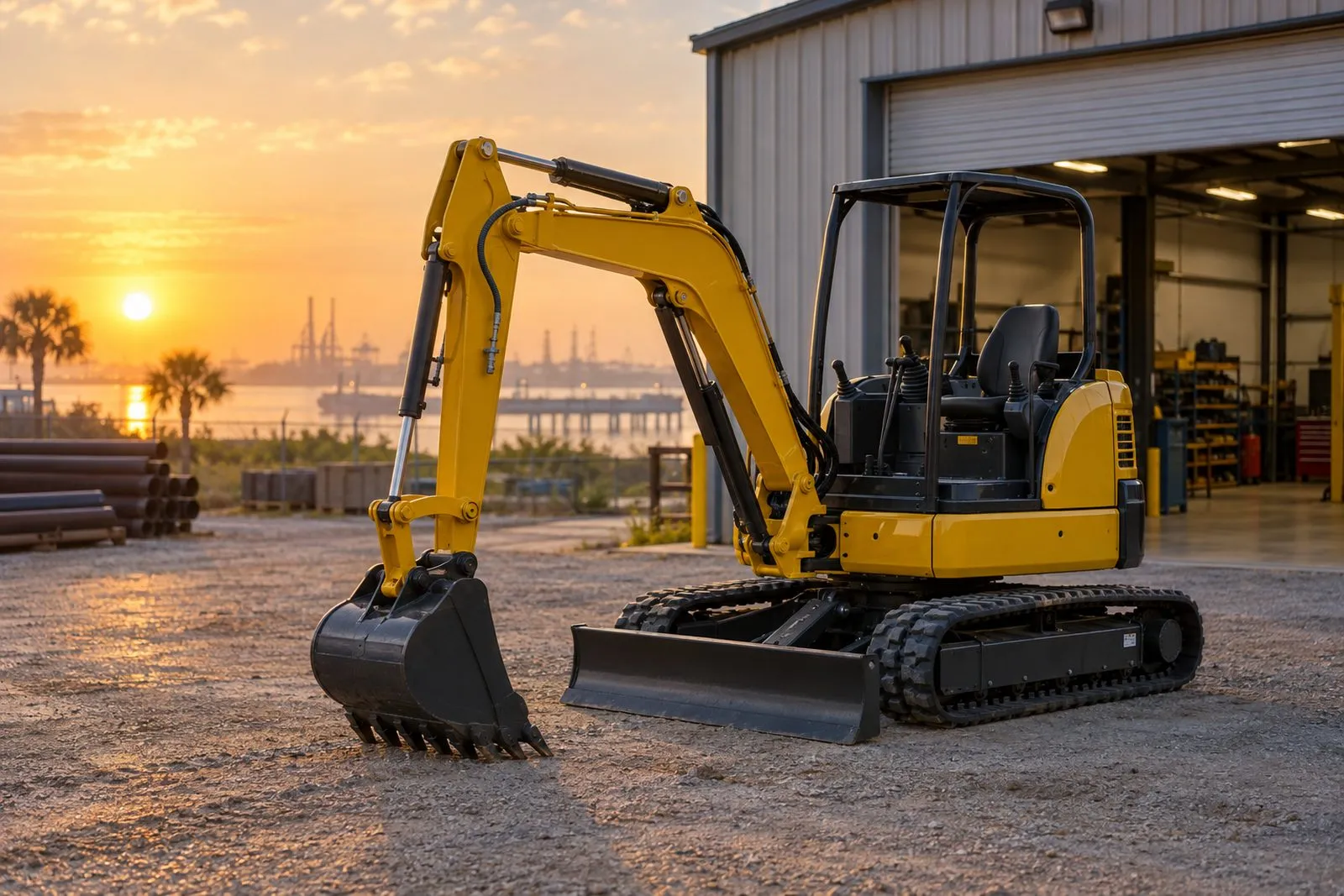
Yes, if your business needs the equipment and you can get it working by December 31. In 2026, most new or used business equipment can be deducted in full the year you start using it, through 100% bonus depreciation or Section 179 expensing. But a purchase you don't need is still a cost, even after the tax savings.
October is when I start getting this question from Houston business owners, usually from contractors, oilfield service companies and medical practices weighing a truck, a machine or a buildout. The 2025 tax law made the rules more generous than they've been in years. It also made the timing rule matter more, because the deduction depends on when the equipment is in service, not when you pay for it.
This is general education, not advice for your specific situation.
What changed for equipment purchases?
The 2025 tax law permanently restored 100% bonus depreciation for qualified property acquired and placed in service after January 19, 2025 (IRS Notice 2026-11). Before that, bonus depreciation had been phasing down each year. Qualified property can be new or certain used property (IRS Publication 946).
Section 179 got bigger too. Here are the 2026 numbers (Rev. Proc. 2025-32):
| 2026 limit | Amount |
|---|---|
| Maximum Section 179 deduction | $2,560,000 |
| Phase-out begins when Section 179 purchases exceed | $4,090,000 |
| Section 179 cap for a heavy SUV | $32,000 |
| Bonus depreciation | 100%, with no dollar cap |
There's one acquisition-date wrinkle. If you signed a written binding contract before January 20, 2025, the equipment generally counts as acquired on the contract date, so it doesn't get the 100% rate (IRS Notice 2026-11). That mostly affects large orders signed in late 2024 or early 2025 with long lead times.
What's the difference between Section 179 and bonus depreciation?
Both get you a first-year deduction, but they behave differently (IRS Publication 946):
| Section 179 | Bonus depreciation | |
|---|---|---|
| How you claim it | Elect it asset by asset | Applies automatically unless you elect out for a whole class of property |
| Dollar limit for 2026 | $2,560,000, phased out above $4,090,000 | None |
| Income limit | Can't exceed taxable income from your active trade or business; the excess carries forward | No business income limit |
| Business use | More than 50% in the year it's placed in service | Listed property, like vehicles, must be used more than 50% for business |
In practice, bonus depreciation does most of the work for most of my clients now. Section 179 is still useful when you want to expense some assets in a class and not others, since the bonus election-out applies to the entire class.
When does equipment have to be in service?
By December 31, 2026, if you want the deduction on your 2026 return. Property is placed in service when it's "ready and available for a specific use," even if you haven't started using it yet (IRS Publication 946).
The IRS gives a useful example: a machine delivered last year but not installed and operational until this year is placed in service this year. A truck that needs a lift installed is placed in service when the modified truck is delivered and ready to work.
For year-end purchases, that means:
- Order early. Supply delays on trucks and specialized equipment are common in the fourth quarter.
- Schedule installation, not just delivery, before December 31.
- Keep the delivery receipt, install sign-off or first-use record in your file.
- Remember that financing doesn't change the timing. A loan-financed machine placed in service in December can be fully deducted in 2026, even though you're paying for it over five years.
Can I deduct a truck or SUV?
It depends on the weight. A passenger automobile, for depreciation purposes, is a vehicle rated at 6,000 pounds or less (gross vehicle weight for trucks and vans) (IRS Publication 946). Those vehicles have annual caps. For a car placed in service in 2026, the first-year limit is $20,300 with bonus depreciation, or $12,300 without it (Rev. Proc. 2026-15).
Heavier vehicles aren't subject to those caps. If you buy an SUV over 6,000 pounds, Section 179 is limited to $32,000 of its cost (Rev. Proc. 2025-32), and bonus depreciation can cover the rest of the business-use portion. Either way, the vehicle has to be used more than 50% for business in its first year, and your deduction is limited to the business-use percentage. A mileage log is what supports that percentage if you're ever examined.
When does buying equipment not make sense?
The deduction is only worth your tax rate. If you're in the 32% federal bracket, a $100,000 purchase saves roughly $32,000 in federal income tax. You're still out $68,000. A few other things to weigh:
- The QBI deduction goes down. If you own a pass-through business, a bigger depreciation deduction lowers your qualified business income, which can reduce your 20% QBI deduction.
- Recapture comes later. If you sell the equipment for more than its depreciated value, that gain is taxed as ordinary income up to the depreciation you claimed, including bonus and Section 179 (IRS Publication 544). That matters if you're planning to sell the business in the next few years; my post on asset sales vs. stock sales covers how recapture shows up in a sale.
- A low-income year wastes the deduction. If 2026 profit is down and you're in a lower bracket than you expect to be later, it can make sense to elect out of bonus depreciation for a class of property and depreciate it over time instead. That election has to be made on a timely filed return (IRS Publication 946).
What about the Texas franchise tax?
Texas used to compute depreciation under the 2007 version of the tax code, which meant bonus depreciation didn't carry over. That changed. Starting with the 2026 franchise tax report, Texas follows federal bonus depreciation for qualifying assets acquired after January 19, 2025 (Texas Comptroller). If you calculate the franchise tax using cost of goods sold, bonus depreciation and Section 179 from your federal return can be included in COGS to the extent they relate to producing goods (Texas Comptroller FAQ).
Your year-end equipment checklist
- List the equipment you were already planning to buy in the next 12 months
- Confirm delivery and installation can happen before December 31, 2026
- Estimate your 2026 business income, and compare your marginal rate this year with next year
- Check the business-use percentage for any vehicle, and start or update a mileage log
- If you might sell the business or the equipment in the next few years, factor in depreciation recapture
- Decide with your tax preparer whether to use bonus depreciation, Section 179, or neither for each class of property
- Keep invoices, delivery records and placed-in-service dates together
Equipment timing fits alongside the other moves in my year-end tax planning checklist and my guide on how to reduce taxes for your small business.
How we help
The right answer depends on your income this year and next, how you're paid from the business, and whether a sale is on the horizon. At Mercer Street, we work on an hourly, fee-only basis, so you can get a focused review without signing up for ongoing management. You can read more about how we work.
Ad hoc planning is billed at $600 per hour with a two-hour minimum. That's usually enough time to model a planned purchase, compare this year's tax rate with next year's, and decide which depreciation method fits.
If you'd like to plan your equipment purchases before December 31, schedule a call.
Frequently asked questions
Can I write off the full cost of equipment I buy in 2026?
Usually, yes. Bonus depreciation is permanently back at 100% for qualifying property acquired and placed in service after January 19, 2025, and the 2026 Section 179 limit is $2,560,000. Between the two, most machinery, computers, furniture and work vehicles can be deducted in the year they start being used. Passenger cars are the main exception because of separate annual dollar caps.
Does equipment have to be delivered by December 31 to get the deduction?
It has to be placed in service by December 31, which means ready and available for its specific use. A machine that's delivered but not installed and operational until January counts as placed in service in January. Ordering, paying a deposit or financing the purchase in December doesn't move the deduction into 2026 on its own.
What's the difference between Section 179 and bonus depreciation?
Both let you deduct equipment in the first year. Section 179 is an election you make asset by asset, it's capped at $2,560,000 for 2026, and it can't exceed your active business income. Bonus depreciation has no dollar cap or income limit and applies automatically to each class of property unless you elect out. Many businesses use both.
Can I deduct a heavy SUV or pickup truck in 2026?
Often, if you use it more than 50% for business. Vehicles rated over 6,000 pounds gross vehicle weight aren't subject to the passenger car depreciation caps. Section 179 for a qualifying SUV is limited to $32,000 in 2026, but bonus depreciation can cover the rest of its business-use cost. You need mileage records to support the business-use percentage.
Is it smart to buy equipment just to lower my taxes?
Rarely. Spending $100,000 to save around $30,000 in tax still costs you about $70,000. The deduction also reduces your qualified business income deduction, and if you later sell the equipment for more than its depreciated value, that gain is taxed as ordinary income. It works best when you were going to buy the equipment soon anyway.
This article is for general educational purposes and is not individualized tax, legal, or investment advice. Tax laws change; confirm how current rules apply to your situation before acting.